

🌿 Cultural Significance
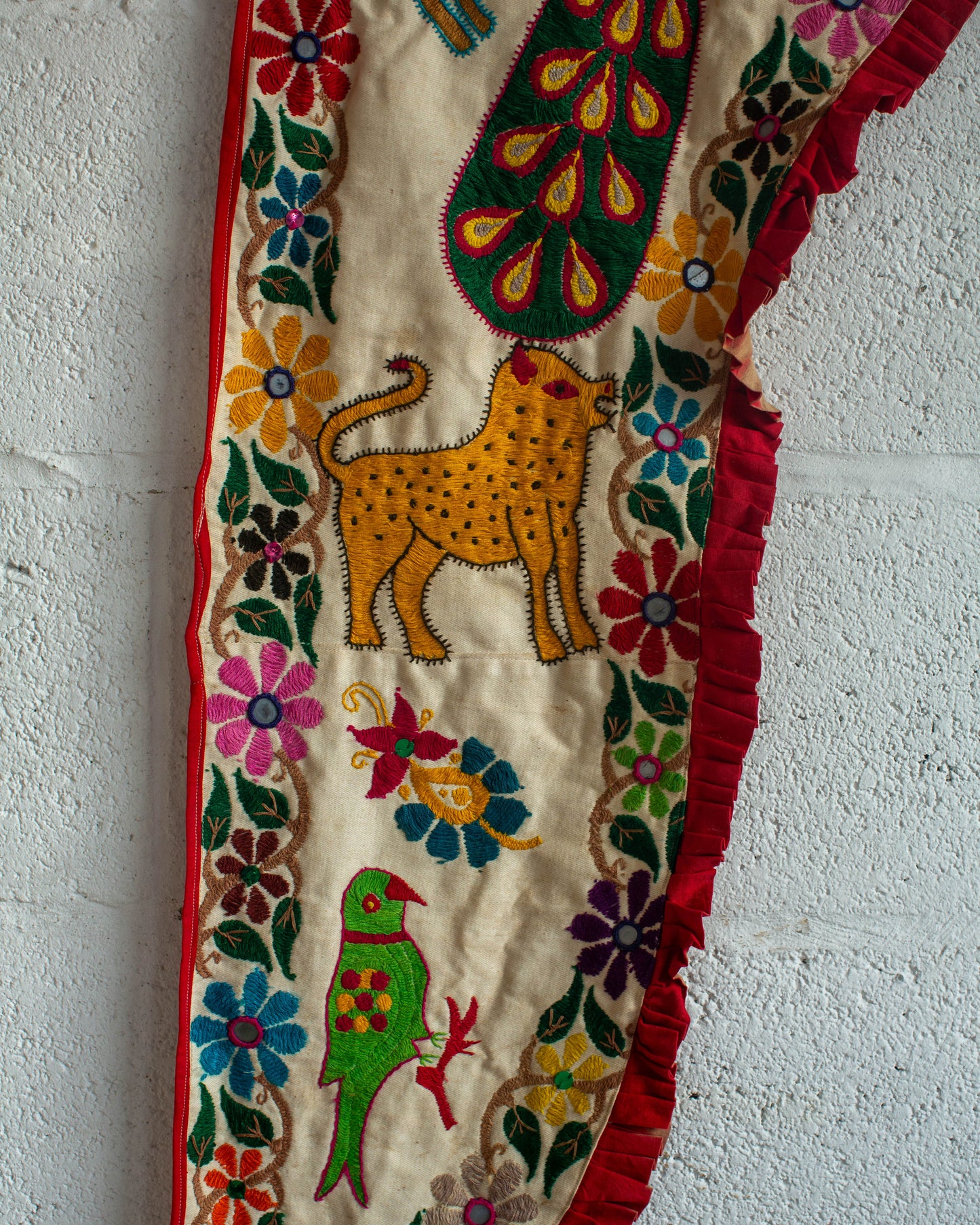
Bandhanwar or Toran is an ornamental hanging rooted in Indian tradition, crafted by tribal artisans and often placed at the entrance of homes during festivals and celebrations.The purpose behind hanging a Toran is to appease Lakshmi, the Goddess of Wealth, symbolically welcoming abundance, positivity, and blessings into the home.🌸
Symbolism & Meaning of the Motifs
🦚 Peacock (Mayur)Symbol of grace, beauty, prosperity, and protection. Believed to bring joy and vitality to the home.
🐦 BirdsRepresent harmony, freedom, and divine messages. Birds are considered auspicious visitors at the doorway.
🦁 Lions, Tigers & Other AnimalsEmbody strength, courage, and guardianship. Traditionally used to protect the entrance from negative energies.
In Hindu tradition, swastikas are placed at entrances, on temple walls, and in festive décor—like Torans—to invite blessings into the home.(This symbol is part of Indian culture and spirituality and is entirely unrelated to the symbol misused in the West in the 20th century.)✨
🌸 Flowers
Symbolize purity, prosperity, and new beginnings. Floral patterns are meant to create a warm, welcoming environment.🔆 Mirrors (Shisha Work)
Used to repel negativity and reflect positive energy into the surroundings. Mirrors are protective elements in Indian folk textiles.
📿 Pearls & Beads
Represent festivity, sacredness, and auspicious decoration. Often used in ceremonial textiles.
🕉 Deities (Gods & Goddesses)
Motifs of Lakshmi, Ganesha, or other gods invite blessings, success, and divine protection.
卐 Swastika (Hindu Swastik)The swastika is an ancient Indian sacred symbol representing:- Good fortune
- Prosperity
- Well-being
- Positive beginnings
- Divine protection
In Hindu tradition, swastikas are placed at entrances, on temple walls, and in festive décor—like Torans—to invite blessings into the home.(This symbol is part of Indian culture and spirituality and is entirely unrelated to the symbol misused in the West in the 20th century.)✨
Vintage Condition
These Torans date back to the mid-twentieth century. Natural ageing may include:
- Missing or cracked mirrors
- Ink marks or blemishes from the original hand-drawing
- Loosened or pulled threads
- Stains may also be present on the torans
- Minor wear consistent with handmade, vintage textiles